
For years, people assumed digital photos would last forever.
Unlike printed photographs that can fade or become damaged over time, digital pictures seemed safer, stored neatly on CDs, floppy disks, memory cards, or old family computers.
But now, many families are discovering a surprising problem:
Some of their oldest digital memories are becoming harder, or impossible to access.
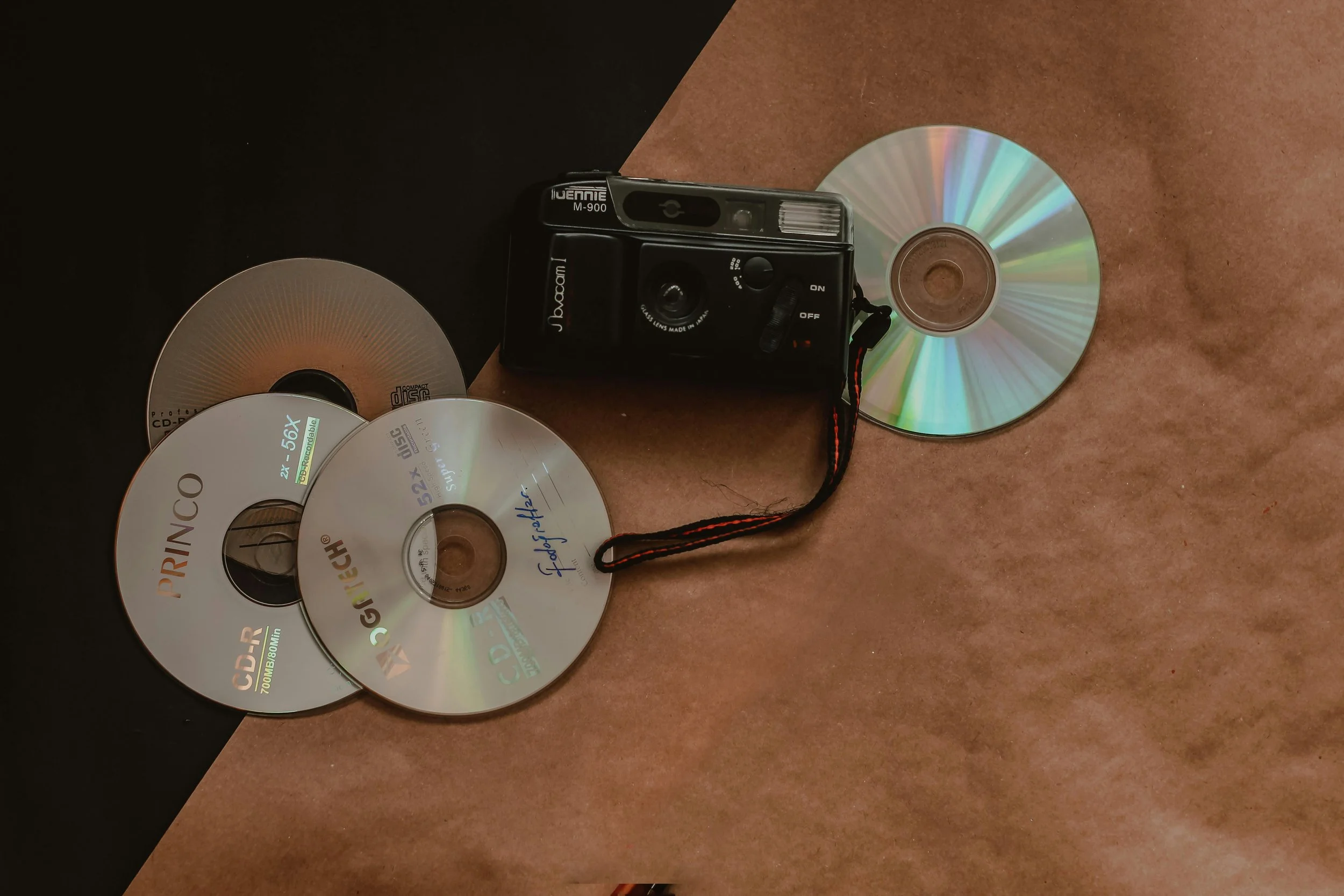
The First Generation of “Digital Memories”
The late 1990s and early 2000s were a turning point for family photography.
People began using:
early digital cameras
floppy disks
CDs and DVDs
ZIP drives
first-generation external hard drives
desktop photo software
At the time, this felt modern and permanent. Photos no longer lived only in albums or shoeboxes.
But technology changed quickly.
Today, many people still have family photos stored on:
old Dell or Gateway computers
CDs labeled “Summer 2002”
forgotten backup drives
memory cards from cameras they no longer own
And in many cases, those files are at risk.
Digital Doesn’t Always Mean Permanent
One of the biggest misconceptions about photography is that digital automatically means safe.
In reality, digital storage depends entirely on technology continuing to work.
Hard drives fail. CDs degrade. File corruption happens. Passwords are forgotten. Older software becomes incompatible with modern computers.
Some families are shocked to discover that printed photos from the 1970s are still perfectly viewable, while digital photos from 1999 can no longer be opened at all.
The “CD Problem” Many Families Are Facing
In the early 2000s, burning photos to CDs became extremely common.
But recordable CDs were never designed for permanent archival storage.
Over time, they can:
become scratched
develop read errors
suffer from disc rot
stop working entirely
Many newer computers also no longer include CD or DVD drives, making those old backups even harder to access.
Why This Matters Now
Every year that passes increases the chance of losing older digital files permanently.
And unlike printed photos, digital files can disappear instantly if a drive fails or media becomes unreadable.
For many families, these files contain:
early childhood photos
family vacations
weddings
holidays
relatives who are no longer here
Once they’re gone, recovery is often difficult, or impossible.
A Better Long-Term Approach
The safest way to preserve family memories is usually a combination of:
digitizing printed photos
transferring older media formats
organizing files
maintaining multiple backups
updating storage methods over time
Preservation isn’t just about storing photos. It’s about making sure future generations can still access them years from now.
Don’t Forget About Your “Older Digital” Memories
When people think about photo preservation, they often focus on printed pictures.
But many of the most vulnerable memories today are actually early digital photos sitting on outdated media.
If you still have old CDs, memory cards, or aging hard drives filled with family pictures, now is a good time to check what’s still accessible — before technology makes those memories even harder to recover.
If you need help
If you have old CDs, memory cards, backup drives, or aging computers filled with family photos, this is a good time to see what’s still accessible. Recovering and organizing older digital memories now can help prevent permanent loss later, before outdated technology makes those files even harder to retrieve. Contact us to get started now.
